












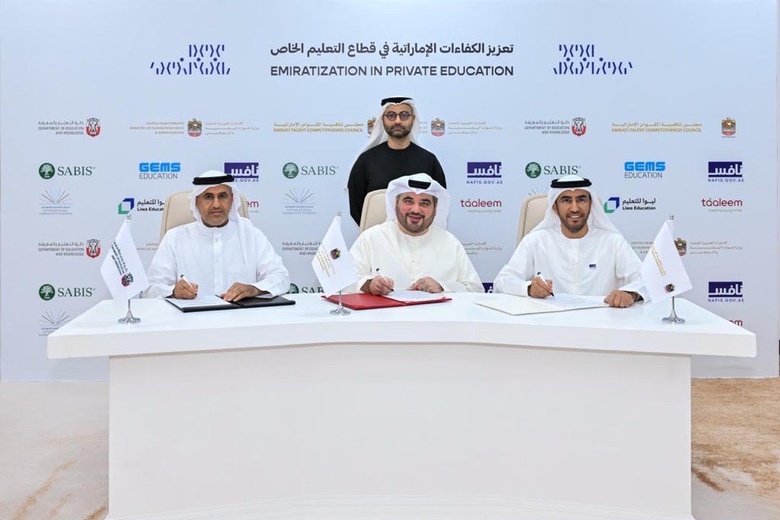
Abu Dhabi has launched a new policy aimed at bringing more than 2,000 UAE Nationals into teaching across its private schools over the next five years. The initiative combines recruitment commitments from major education groups with funded training and new routes into teaching, potentially widening career opportunities for Emirati jobseekers and strengthening the national representation of teachers in classrooms.
The Abu Dhabi Department of Education and Knowledge (ADEK) announced the Emiratisation Policy for Private Education on 23 October, working with the Ministry of Human Resources and Emiratisation (MOHRE), Emirati Talent Competitiveness Council (NAFIS) and private education operators SABIS, Taaleem, GEMS Education, International Community Schools, and Liwa Education to expand national talent pathways into teaching across Abu Dhabi. The plan focuses initially on Arabic, Islamic Studies and Social Studies teaching roles.
Emirati Teachers Could Benefit From New Training Routes
The policy aims to address both sides of teacher recruitment. Schools need access to qualified Emirati candidates, while aspiring teachers need suitable training, recognised qualifications and clear routes into employment.
To support this, ADEK will work with participating schools to connect recruitment needs with training and placement opportunities. The policy also introduces Emirate-level Emiratisation targets for teaching positions in Abu Dhabi’s private schools, complementing existing federal requirements.
For Emirati jobseekers considering education as a career, the initiative could provide more structured entry points. Meanwhile, existing professionals who want to move into teaching may also find new opportunities, subject to the relevant eligibility and qualification requirements.
Major Education Groups Commit To Recruiting Emirati Teachers
Five private education operators have made recruitment commitments under the initiative. Their pledges amount to more than 600 Emirati educators, with recruitment expected to take place progressively over the next five years.
The commitments announced by ADEK are,
- Taaleem has committed to recruiting more than 200 Emirati educators.
- SABIS has committed to recruiting more than 150.
- GEMS Education has committed to recruiting more than 120.
- International Community Schools has committed to recruiting more than 77.
- Liwa Education has committed to recruiting more than 61.
These commitments build on an earlier agreement between ADEK and Aldar Education in May 2026, which set out plans to create more than 300 opportunities for Emirati educators.
Together, the agreements indicate a broader effort to make Emiratisation part of private school recruitment and workforce planning. However, the latest announcement does not provide individual school-level targets or specify how the new requirements will be phased in at each school.
NAFIS Teachers Programme Offers Financial Support
Training and financial support are central to the plan. The Teachers Programme, a NAFIS initiative delivered by the Emirates College for Advanced Education (ECAE) in partnership with ADEK, will provide pathways into teaching for eligible Emirati jobseekers and people seeking to change careers.
The programme offers two routes, Teacher and Teacher Assistant, allowing candidates with different qualification levels to explore careers in private education. Eligible participants on the Teacher pathway may receive a monthly financial incentive of up to AED 4,000 during training.
Additionally, ADEK is building on two existing initiatives. Midad, launched earlier in 2026, gives UAE Nationals an entry point to explore teaching. Kon Moallim, launched in 2025, offers selected candidates a sponsored postgraduate qualification in education. Both programmes are delivered in partnership with ECAE.
The announcement also highlights the Emirati Student Employment Contract programme. It allows eligible UAE Nationals to join an employer while still studying, with financial support, a monthly salary, pension registration and practical workplace training. Participants can also count towards their employer’s applicable Emiratisation targets.
For prospective teachers, these routes could help reduce some of the financial and practical barriers to entering the profession. Eligibility conditions apply, and candidates should check the relevant programme requirements before making career plans.
What The Policy Means For Schools And Students
For school leaders, the policy brings recruitment and teacher development into closer alignment. Access to screened candidates, funded qualification routes and school-based training could help participating schools build a more sustainable pipeline of national teaching talent.
The initial focus on Arabic, Islamic Studies and Social Studies also places subjects closely connected to language, culture and national identity at the centre of the recruitment drive.
For students, the potential impact goes beyond the number of Emirati teachers hired. ADEK says the wider initiative is intended to strengthen inclusive learning, student wellbeing and support for Students of Determination. Its effectiveness will depend on successful recruitment, appropriate preparation and the quality of support teachers receive once they enter schools.
The policy is anchored in the Abu Dhabi Educators’ Proficiency Framework, developed by ADEK and ECAE. The framework sets out expectations around national identity, cultural respect, ethical responsibility, compassion, professional excellence, lifelong learning and collaboration.
These principles place professional capability alongside cultural understanding. Both will matter as schools work to ensure new recruits are prepared for the demands of classroom teaching.
How Abu Dhabi’s Emiratisation Policy Will Develop
ADEK says it will continue working with private schools across the emirate to support implementation, facilitate access to national talent and help schools progress towards the new targets.
The five-year ambition is clear, but delivery will be the key measure of progress. Recruitment numbers will show how many opportunities are created, while training outcomes, teacher retention and classroom support will help indicate whether those opportunities develop into lasting careers.
For Emirati candidates, the new policy offers additional routes to explore teaching. For school leaders, it signals a need to plan recruitment and professional development around the growing role of national talent.
Ultimately, the initiative’s value will be measured not only by how many Emiratis enter the profession, but also by how effectively schools support them to become qualified, confident and successful educators.
For more details please visit
Further Reading
- What Parents Should Look For In Saudi International Schools
- Helping Saudi Parents Navigate AI In Education