









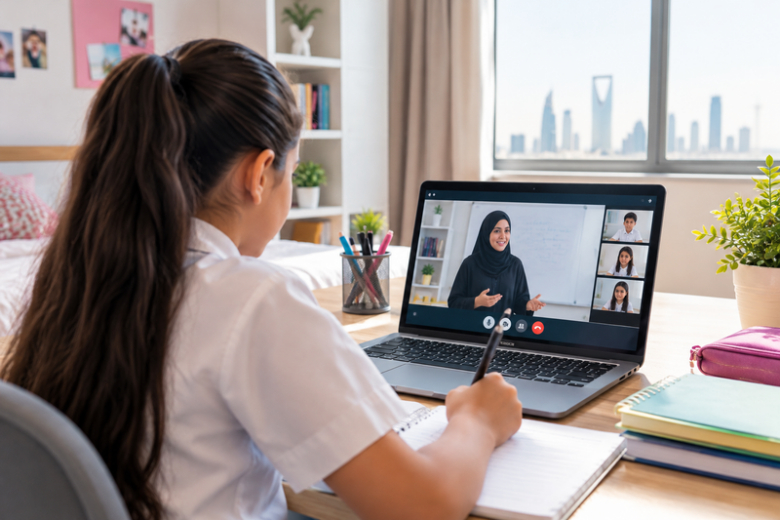
Riyadh remote learning has returned to the spotlight after schools moved classes online following recent attacks on the capital. For students, the change has brought a mix of benefits and challenges, from extra sleep and less time spent travelling to school to difficulties with concentration and missing friends.
The switch also highlights how Saudi Arabia’s experience with online education during the COVID-19 pandemic has helped pupils and teachers adapt. However, familiarity with digital platforms does not necessarily make learning from home easier for everyone.
Why Riyadh Schools Have Returned to Remote Learning
Schools in Riyadh shifted to remote learning on 11 October due to regional conflicts. Parents were informed that lessons would take place online through Thursday.
The move has brought students back to a learning model that became familiar during the COVID-19 pandemic. At the time, Saudi pupils used digital platforms to continue their education from home.
The Ministry of Education’s Madrasati platform supports this approach by providing access to timetables, assignments, virtual classrooms, learning resources and communication with teachers. The platform also offers tools for assessments and tracking academic progress.
As a result, many students already understand how to attend lessons and submit their work online. Nevertheless, the experience of learning remotely continues to vary depending on a child’s home environment, learning preferences and need for direct support.
Riyadh Remote Learning Brings Mixed Experiences for Students
For 12-year-old Sara Al-Qahtani, using online learning platforms is straightforward. However, she misses the social side of attending school. She said,
“Studying itself is not difficult because we already know how to use everything. But I miss seeing my friends. At school, we talk between classes and have breaks together. Online, when the class finishes, you just leave.”
Her experience highlights an important part of school life that digital lessons cannot easily replicate. Time with friends, informal conversations and shared breaks all contribute to a child’s sense of belonging.
Meanwhile, 15-year-old Abdullah Al-Harbi finds concentration more difficult at home. He said,
“At home there are more distractions. You have your phone next to you and you can get distracted very easily. In school, you are already there and focused on the class.”
Although remote learning removes the daily journey to school, it also places greater responsibility on students to manage their time and attention.
Al-Harbi said moving between lessons online is straightforward and that staying at home gives him more time in the morning. However, he still prefers face-to-face teaching. He said,
“If I don’t understand something, it’s easier to ask the teacher when we’re actually in class.”
His experience reflects a common consideration for families. Online lessons can make the school day more convenient, but children may need additional help when they struggle with a topic or cannot easily ask questions.
Why Some Students Prefer Online Education
Not every student sees the return to remote learning as a disadvantage. For some, the flexibility of studying at home makes the school day more manageable.
Abdullah Abudaqqa, a Jordanian student living in Riyadh, said avoiding traffic and travelling gives him more time to concentrate on his studies. He said,
“Personally, I think distance learning is better because attending school in person takes time. You have to travel to school, and the roads are usually crowded with traffic. With online learning, you can stay at home, focus more on your studies, and feel more comfortable at the same time.”
Similarly, Abdulrahman Adil, a Sudanese student in Riyadh, believes the change has brought practical benefits. He said,
“The only thing that changed is the education. It’s online now, and I think personally that is better.”
Adil said remote learning allows students to get more sleep and avoid long journeys, particularly for those who live far from their schools. He also believes that some pupils who struggle to concentrate in traditional classrooms may find studying at home easier.
Hesham Aeid, a Syrian resident in Riyadh, also welcomed the change. He said,
“I think online education is a nice experiment, or a nice idea, as it helps students focus more and feel safer. That’s why I think online education is best for us”
He said some students feel uncomfortable or confined in school buildings, making distance learning a preferable option for them.
These different experiences show why remote learning does not suit every pupil in the same way. A quieter home environment may help one student concentrate, while another may need the structure and interaction of a classroom.
What Remote Learning Means for Teachers and Parents
Teachers also face challenges when lessons move online. They must find ways to keep pupils involved, check understanding and identify those who may be struggling.
Noura Al-Otaibi, a teacher in Riyadh, said online lessons require more effort to maintain participation. He said,
“In the classroom, I can see immediately if someone isn’t following or doesn’t understand. Online, that’s more difficult, so I have to keep asking questions and making sure they participate.”
Her experience highlights the importance of active teaching during online lessons. Teachers may need to ask more questions, invite pupils to contribute and check that students are following the material.
However, the experience gained during the pandemic has made the latest transition easier for many schools. He said,
“Before, everyone was learning how to use the platforms at the same time, teachers, students and parents. Now the students already know what to do. The challenge is keeping the same level of interaction.”
For parents, supporting children during remote learning involves more than ensuring they can log in. A consistent routine, a suitable study space and regular breaks can help pupils manage their school day.
Additionally, parents can encourage children to ask teachers for help when they do not understand a lesson. Keeping in touch with school staff can also help families identify problems before they affect a child’s progress.
Saudi Arabia’s Madrasati platform provides features that support communication between teachers and students, alongside access to assignments, learning materials and academic reports.
How Families Can Support Children During Online Classes
The return to remote learning is a reminder that access to technology is only one part of effective online education. Children also need routines, opportunities to interact and support when lessons become difficult.
Parents can help by setting regular waking and sleeping times, limiting unnecessary distractions and making sure children have the equipment needed to attend lessons. Where possible, a quiet study area can help pupils distinguish school time from leisure time.
Meanwhile, teachers can maintain engagement by encouraging questions, using interactive activities and checking pupils’ understanding throughout lessons.
It is also important to protect time away from screens. Children still need physical activity, rest and opportunities to spend time with family and friends.
Ultimately, Riyadh remote learning has shown that online education can offer flexibility and convenience, but it also presents challenges that schools and families must address together.
As pupils adjust to studying from home, their experiences underline the value of balancing digital access with teacher support, social interaction and the routines that help children learn.
Read the original article here.
For more information regarding updates from the Ministry of Education please visit,
Further Reading
- Saudi Arabia Opens School Performance Data to Parents in Landmark Move
- Saudi Arabia’s Human Capability Agenda and the African Opportunity Ahead