










AI in education is changing how children learn, complete homework and interact with technology. For parents in Saudi Arabia, the challenge is helping children benefit from these tools without losing independent thinking, online safety or academic honesty.
As the new school year gets underway, families need practical ways to guide children’s technology use. One World International School (OWIS) Riyadh outlines how parents can encourage responsible AI use while helping children build the skills they need for learning.
How AI In Education Is Changing The Classroom
AI tools can adapt learning activities to a child’s pace, offer immediate feedback and explain difficult concepts in different ways. Used carefully, these tools can help children understand subjects that might otherwise feel challenging.
However, technology alone does not guarantee better learning. Children still need to question information, solve problems and develop their own ideas.
As AI becomes more common, critical thinking, creativity and computational thinking are increasingly important. Parents can support these skills by encouraging children to ask questions and explain what they have learnt, rather than simply looking for the quickest answer.
What Parents Should Know About AI In Schools
Schools approach AI and digital learning in different ways. Therefore, parents should ask how their child’s school teaches technology skills, protects pupils online and sets expectations for using AI in assignments.
OWIS Riyadh describes a technology pathway that develops as children progress through school. Its approach includes digital literacy, coding, robotics, design, AI awareness and problem-solving.
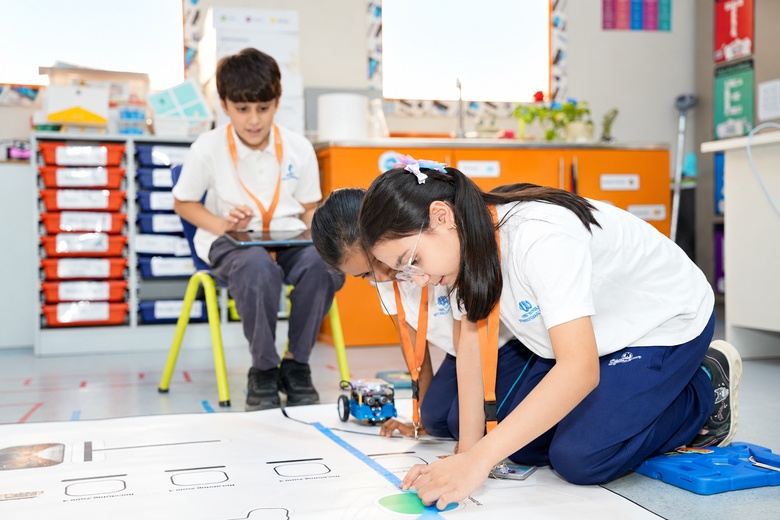
In the Early Years, pupils use the school’s ZeroOne Hub makerspace for hands-on activities. These include screen-free exercises designed to develop sequencing, logical thinking and problem-solving.
As pupils move into primary school, they begin working with coding tools such as ScratchJr, alongside robotics and introductory 3D design. Older primary pupils progress to Scratch, Sphero robotics and micro, with introductory AI programming through sensor integration.
Meanwhile, middle and high school pupils explore Python programming, app and web development, digital literacy and more advanced AI concepts. The programme also introduces discussions about ethics and responsible technology use.
For parents, the key question is whether technology supports clear learning goals. Children should understand not only how to use digital tools, but also when to question their results and how to use them responsibly.
How To Keep Children Safe Online
AI adds new considerations to online safety. Children may encounter misleading information, AI-generated content or tools that collect personal data.
Parents can help by establishing clear expectations at home. The following steps offer a practical starting point.
Keep Conversations About Technology Open
Ask children which tools they use, what they find helpful and whether anything online makes them uncomfortable. Regular conversations can make it easier for them to ask for help when something goes wrong.
Additionally, parents should make it clear that children can discuss online mistakes without automatically fearing punishment.
Teach Children To Question Online Information
AI tools can produce inaccurate information and convincing content that is not genuine. Encourage children to check facts against reliable sources and think about who created the information.
For example, a child researching a school project should compare AI-generated answers with textbooks, trusted websites and information provided by teachers.
Set Boundaries Around Screen Time And Privacy
Agree on reasonable screen-time limits and establish technology-free periods where appropriate. Parents should also explain why children must not share sensitive personal information with unfamiliar platforms.
Furthermore, review privacy settings and age requirements before allowing children to use new AI tools.
Work With Your Child’s School
Online safety is a shared responsibility. Schools can teach digital citizenship, while parents reinforce those lessons at home.
Ask teachers about the school’s rules for AI use, approved platforms and reporting concerns. Consistent expectations between home and school can help children make safer choices.
Should Children Use AI For Homework?
Whether children should use AI for homework depends on the task and the school’s rules. AI can help them brainstorm ideas, explore unfamiliar concepts or check their understanding.
However, problems arise when children submit AI-generated work without understanding it. In that situation, a completed assignment may hide gaps in learning.
Parents can encourage responsible use by asking children to explain their answers in their own words. They can also ask what sources they consulted and how they checked the information.
A useful principle is to treat AI as a learning aid rather than a substitute for thinking. Children should use it to clarify ideas and practise skills, not simply to finish assignments faster.
Before allowing AI in homework, parents should also check the teacher’s expectations. Some tasks may permit AI assistance, while others may require independent work.
Building Independent And Responsible Learners
Children need more than technical knowledge to use AI well. They also need curiosity, honesty, judgement and the confidence to work through difficult questions.
Parents can nurture these qualities by encouraging children to attempt problems independently before turning to digital assistance. They can also praise thoughtful questions, persistence and honest acknowledgement of mistakes.
At OWIS Riyadh, the technology pathway combines practical projects with coding, robotics, AI awareness and digital design. The school also highlights kindness, responsibility and integrity as values guiding technology use.
For families, the wider lesson is that digital skills and personal values should develop together. Children need to understand what technology can do, where it can fail and when human judgement matters.
Questions Parents Should Ask Their Child’s School
Before choosing or approving AI tools, parents can ask their child’s school a few practical questions.
- Which AI tools are pupils permitted to use?
- How does the school teach online safety and digital citizenship?
- What are the rules for AI assistance in homework and assessments?
- How does the school protect children’s personal information?
- How are pupils taught to check AI-generated information?
- Who should parents contact if they have concerns about a child’s technology use?
These questions can help families understand the school’s approach and reinforce consistent habits at home.
AI will continue to influence how children access information and approach schoolwork. However, responsible use depends on guidance from adults, clear school expectations and opportunities for children to think independently.
For parents, the goal is not simply to limit technology. It is to help children use it safely, honestly and with a clear understanding of their own responsibility for learning.
For more details please visit
Further Reading
- ZAKS Invites Schools to Build Smarter, More Efficient Uniform Programmes
- EtonHouse Riyadh Curriculum Guide, What Parents Should Know From Preschool To Primary School