










Teaching methods have changed considerably over the years. Innovative teaching methods now give students more opportunities to ask questions, solve problems, work with others and apply classroom knowledge to real situations. However, traditional teaching still has an important role, particularly when students need clear explanations, structure and guidance.
For parents choosing a school, understanding these approaches can offer a clearer picture of their child’s daily learning experience. For educators and school leaders, the challenge is finding methods that improve learning rather than adopting new ideas simply because they are popular.
Global Schools Group (GSG), which offers different curricula across its international school network, highlights personalised learning, inquiry-based education and practical learning experiences as part of its educational approach. Its example also raises a wider question for schools. How can they combine different teaching methods while maintaining consistent standards?
How Have Teaching Methods Changed Over The Years?
For generations, classroom learning often centred on teacher explanations, textbooks, note-taking and examinations. These methods continue to help students build knowledge and practise essential skills. However, many classrooms now combine direct instruction with activities that encourage students to take a more active role.
Technology has also expanded the ways teachers can present information, monitor progress and provide additional support. Meanwhile, greater attention to collaboration, independent thinking and practical problem-solving has influenced how schools plan lessons.
This does not mean that every lesson needs a digital tool or a group project. Effective teaching depends on the subject, the age of the students and what they need to learn. Research reviewed by the OECD also highlights the importance of teacher guidance, classroom interaction and feedback, rather than treating any single approach as a solution for every learner.
The most useful question is therefore not whether a method is new. It is whether it helps students understand, remember and apply what they learn.
10 Innovative Teaching Methods Used In Modern Classrooms
1. Inquiry-Based Learning
Inquiry-based learning encourages students to investigate questions, explore evidence and develop their own understanding. Instead of simply receiving information, they learn to ask questions and explain their reasoning.
For example, a science teacher might ask students why certain materials retain heat better than others. Students can make predictions, conduct experiments and discuss their findings.
This approach aligns with the International Baccalaureate (IB) emphasis on inquiry, action and reflection. It can help students develop curiosity, critical thinking and the confidence to investigate unfamiliar topics.
However, inquiry needs structure. Teachers must introduce essential knowledge, guide investigations and correct misconceptions to ensure students reach sound conclusions.
2. Project-Based Learning
Project-based learning gives students an extended task linked to a question, challenge or real-world issue. They might design a water-saving campaign, create a model sustainable city or develop a presentation about local history.
Students apply knowledge from different lessons as they research, plan, create and present their work. They also practise teamwork, time management and communication.
For parents, project-based learning can make it easier to see how classroom knowledge connects with everyday life. For teachers, clear assessment criteria help ensure that the project develops subject knowledge as well as practical skills.
Projects should complement, rather than replace, explicit teaching and individual practice.
3. Blended Learning
Blended learning combines face-to-face teaching with digital resources. Students might discuss a topic with their teacher, use an online activity to practise a skill and then apply what they have learnt in class.
Digital platforms can give students additional opportunities to revisit explanations or complete practice tasks. Teachers can also use the information available to identify topics that need further attention.
The approach can support flexible learning, but technology alone does not guarantee better outcomes. Schools need suitable resources, clear expectations and teachers who know when digital activities are useful.
4. Personalised And Adaptive Learning
Students do not all learn at the same pace or need the same level of support. Personalised learning allows teachers to adjust tasks, explanations and levels of challenge to individual needs.
Adaptive learning platforms can also respond to students’ answers by offering different questions or practice activities. However, technology should support teachers’ professional judgement rather than make every learning decision.
GSG states that its SmartLearn system supports personalised learning by taking account of students’ strengths, weaknesses, interests and learning pace. Its approach illustrates how digital systems can help teachers identify areas where individual guidance may be needed.
For students, appropriate personalisation can provide extra practice where necessary and more challenging work when they are ready. Regular teacher feedback remains essential.
5. The Flipped Classroom
In a flipped classroom, students encounter some learning material before a lesson. They might read a short text, watch an explanation or complete a preparatory activity at home.
Classroom time can then focus on questions, discussion, guided practice and problem-solving. For example, students might review the basics of fractions before working through more challenging problems with their teacher.
This approach can make lesson time more interactive. However, teachers must ensure that preparation is accessible to all students, including those without reliable internet access or a quiet place to study.
The flipped classroom works best when pre-lesson tasks are manageable and teachers check understanding before moving forward.
6. Gamification And Game-Based Learning
Gamification introduces elements such as points, challenges, progress markers and rewards into learning activities. Game-based learning uses games themselves to practise or develop particular skills.
A language lesson might use a vocabulary challenge, while a mathematics class could use a team-based problem-solving game. These activities can make practice more engaging, particularly for younger students.
They can also provide quick feedback and give students repeated opportunities to improve. Nevertheless, competition and rewards should not become the main purpose of learning.
Teachers need to ensure that activities reinforce the lesson’s objectives and allow students with different confidence levels to participate.
7. Collaborative And Peer Learning
Collaborative learning gives students opportunities to discuss ideas, solve problems and complete tasks together. Peer learning can also involve students explaining a concept or demonstrating a method to classmates.
For example, a group studying a historical event might compare different accounts and present a shared conclusion. Each student needs to contribute, listen to others and explain their reasoning.
These activities can help develop communication, teamwork and respect for different perspectives. Explaining an idea can also help students recognise gaps in their own understanding.
Teachers should establish clear roles and expectations, however, so that one student does not end up completing the work for everyone else.
8. Experiential And Outdoor Learning
Experiential learning connects lessons with direct experiences. Students might conduct experiments, visit a local heritage site, observe plants outdoors or collect information for a geography investigation.
Such activities can help make abstract concepts more concrete. A lesson about ecosystems, for instance, can become more meaningful when students observe relationships between plants, insects, soil and water.
GSG describes practical and immersive experiences, including student-led clubs, skill studios and passion projects, as part of its approach to learning.
These experiences can help students recognise interests and apply classroom knowledge. Teachers should still connect each activity to clear learning goals and allow time for discussion and reflection afterwards.
9. Competency-Based Assessment
Traditional examinations remain useful for checking knowledge and understanding. However, they provide only one view of a student’s progress.
Competency-based assessment focuses on what students can demonstrate they know and can do. Depending on the subject, teachers might use presentations, practical tasks, portfolios, performances or ongoing assessments alongside tests.
For example, a student learning a language could demonstrate progress through writing, speaking and listening activities. A science student might explain an experiment and interpret the results.
This broader approach can help teachers identify strengths and areas for improvement. It also gives students clearer feedback about the skills they need to develop.
Schools must use clear criteria and reliable assessment practices to ensure that expectations remain fair and consistent.
10. Cross-Curricular And Interdisciplinary Learning
Cross-curricular learning connects ideas across different subjects. Instead of studying every topic in isolation, students explore how knowledge from one area can help explain another.
A sustainability project, for example, could bring together science, geography, mathematics and English. Students might investigate water consumption, interpret data and prepare recommendations for reducing waste.
This approach can help students recognise connections between subjects and apply knowledge in unfamiliar situations. It also encourages them to consider problems from different perspectives.
Teachers need to coordinate lesson objectives and assessment carefully. Students still require a strong understanding of individual subjects before they can make meaningful connections between them.
What Do These Teaching Methods Mean For Students?
Innovative teaching methods can offer several benefits when schools implement them with clear learning goals and appropriate guidance.
Students may have more opportunities to practise independent thinking, communicate their ideas and apply knowledge to practical situations. Additionally, varied activities can give teachers different ways to identify misunderstandings and support individual progress.
However, no method guarantees better results on its own. Students still need clear explanations, opportunities to practise, constructive feedback and time to consolidate what they have learnt.
The balance matters. A group project may develop collaboration, while direct instruction may be the most effective way to introduce a difficult concept. Good teachers select methods according to the learning objective, rather than following a fixed formula.
How Schools Can Combine Innovation With Consistent Teaching
For school groups operating across different campuses, introducing new teaching methods is only one part of the challenge. Schools also need to train teachers, assess progress and maintain suitable standards across classrooms.
GSG’s published educational approach brings together multiple curricula, including IB and Cambridge, alongside other programmes offered across its network. The group also describes a shared pedagogical framework and technology-supported learning as elements of its model.
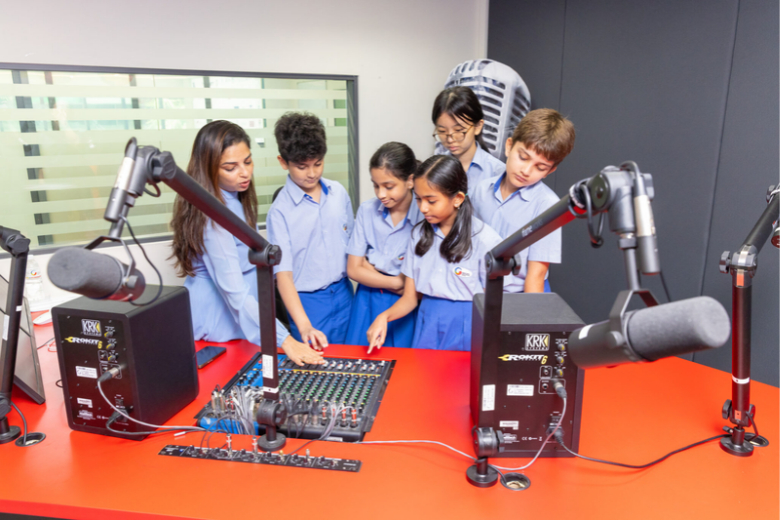
 Students conduct a hands-on science experiment, applying classroom knowledge through practical learning
 Students participate in a project-based learning activity that connects academic subjects with real-world challenges
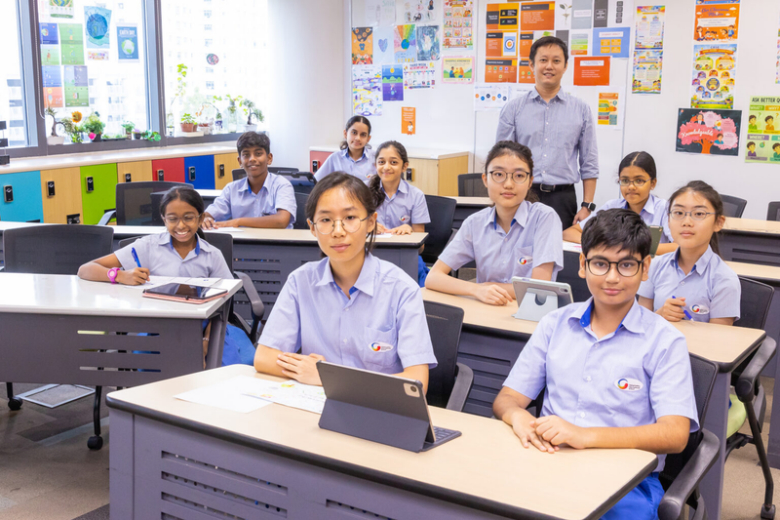 Students engage in a classroom discussion, comparing ideas and learning to explain their thinking with confidence
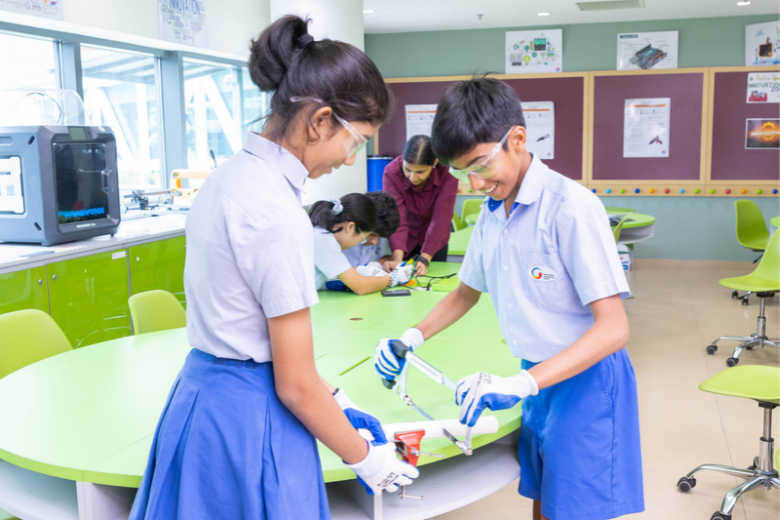 Students collaborate on a group project, developing teamwork, communication and critical-thinking skills
 Students explore different ways of learning in a classroom environment, building knowledge, confidence and skills for the future
This illustrates how a school network can offer different curriculum pathways while setting common expectations for teaching and student development. However, the effectiveness of any approach depends on how it works in individual classrooms and how schools evaluate its impact.
School leaders can support effective implementation by investing in teacher development, providing appropriate resources and reviewing student progress regularly. They should also give educators time to plan lessons together and adapt activities to the needs of their students.
For parents, useful questions include how teachers identify learning gaps, how students receive feedback and how schools balance academic knowledge with practical skills.
What Should Parents Look For When Choosing A School?
The number of innovative teaching methods a school advertises is not necessarily a reliable measure of educational quality. Parents should look at how those methods work in practice.
During a school visit, consider asking,
- How do teachers adapt lessons for students who need extra support or greater challenge?
- How does the school assess progress beyond examinations?
- What opportunities do students have to investigate questions and apply their learning?
- How does the school train teachers to use different teaching methods?
- How does it explain a child’s progress and areas for improvement to parents?
These questions can reveal more about the learning experience than a list of educational trends. They also help families understand whether a school’s approach suits their child’s needs, interests and stage of development.
Innovative Teaching Is About More Than New Activities
Teaching methods have evolved, but effective education still depends on the relationship between teachers, students and knowledge. Digital tools, projects and collaborative activities can enrich lessons, while direct instruction, practice and feedback remain essential.
Ultimately, the most useful innovative teaching methods are those that help students understand their subjects, develop confidence and apply what they know. Schools need to support teachers, assess what works and adapt their approach when students need something different.
GSG’s combination of multiple curricula, personalised learning and practical experiences offers one example of how a school network approaches teaching and learning. For families and educators, the wider lesson is to look beyond claims of innovation and focus on what students actually experience, learn and achieve.
For more details about GSG, please visit
Further Reading
- Cambridge IGCSE Mathematics, 10 Study Strategies To Help Students Succeed
- Saudi Education Law 2026, What Parents And Schools Need To Know