










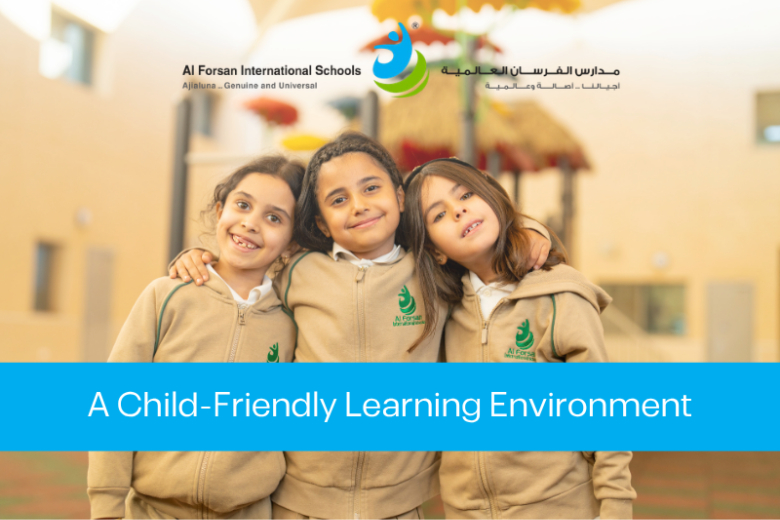
Choosing a learning environment for children is about far more than finding a school with impressive facilities. Parents want their children to enjoy coming to school, feel supported by their teachers, build confidence and develop the skills they need for future study.
For families in Riyadh, Jeddah and Al Khobar, the decision can be particularly important when comparing international schools. Parents are often weighing curriculum, language, academic support, university pathways and cultural values at the same time.
So, what makes a learning environment for children genuinely effective?
It starts with the experience children have every day. They need classrooms where they can participate, teachers who understand their individual needs, opportunities to develop beyond academics and a school culture that supports both global learning and personal identity.
Al Forsan International Schools offers one example of this approach. The school provides an American curriculum based on Common Core State Standards and Next Generation Science Standards, while maintaining a strong focus on Arabic language and Islamic culture. Its schools serve children from ages 3 to 18 across Riyadh, Jeddah and Al Khobar.
What Makes A Learning Environment Effective For Children?
A strong learning environment for children is not defined by one feature. Instead, it brings together the physical, emotional, social and academic aspects of school life.
Parents can look at five key areas when visiting a school.
A Comfortable Physical Environment
Children spend a significant part of their day at school, so the physical setting matters.
Classrooms should provide enough space for children to participate in different types of learning. Facilities should also support practical activities, movement, collaboration and independent work.
However, good facilities should serve learning rather than simply look impressive.
A Safe And Supportive Environment
Children learn more confidently when they feel safe enough to ask questions and make mistakes.
A supportive school culture should encourage children to participate without worrying about embarrassment. Teachers should also be able to recognise when a child needs additional academic, emotional or pastoral support.
For younger children in particular, feeling known and cared for can make the transition into school much easier.
Strong Relationships With Teachers
The relationship between a child and their teacher can have a major influence on their experience of school.
Parents should therefore ask whether teachers have enough time to understand individual students. Smaller classes can help teachers monitor progress more closely and identify areas where additional support may be useful.
Al Forsan says it maintains limited class sizes, with two teachers supporting each kindergarten classroom.
An Academic Environment That Encourages Understanding
A good school should do more than prepare children for tests.
Students need opportunities to develop problem-solving, communication, collaboration and critical-thinking skills. A clear curriculum should provide academic structure while allowing teachers to make learning engaging and relevant.
At Al Forsan, the American curriculum follows Common Core State Standards and Next Generation Science Standards. English is the main language of instruction, while Arabic and Islamic Studies remain important parts of the educational programme.
A School Culture That Supports Identity
For many families choosing an international school, global education does not mean giving up cultural identity.
Parents may want their children to become confident English speakers and develop international academic pathways while remaining connected to Arabic language, Islamic values and their wider culture.
This balance can be an important consideration when comparing schools.
What Should Parents Look For In A Learning Environment For Children?
When visiting a school, parents can often learn more by looking beyond the prospectus.
Ask whether children are encouraged to participate rather than simply listen. Look at how teachers speak to students. Notice whether classrooms feel calm, purposeful and welcoming.
It is also worth asking how the school supports children who need extra help.
Questions such as these can help parents assess whether a school is likely to suit their child,
- Can children ask questions without feeling embarrassed?
- Do teachers know their students individually?
- Are classes small enough for personalised attention?
- Is academic support available when students fall behind?
- Are students encouraged to explore interests outside the classroom?
- How does the school support Arabic language and cultural identity?
- What pathways are available for university preparation?
- Are children given opportunities to develop confidence, communication and leadership?
These questions can reveal much more about a school than a list of facilities.
How Al Forsan Builds Its Learning Environment
Al Forsan International Schools has positioned its educational model around international academic standards, personalised support and cultural values.
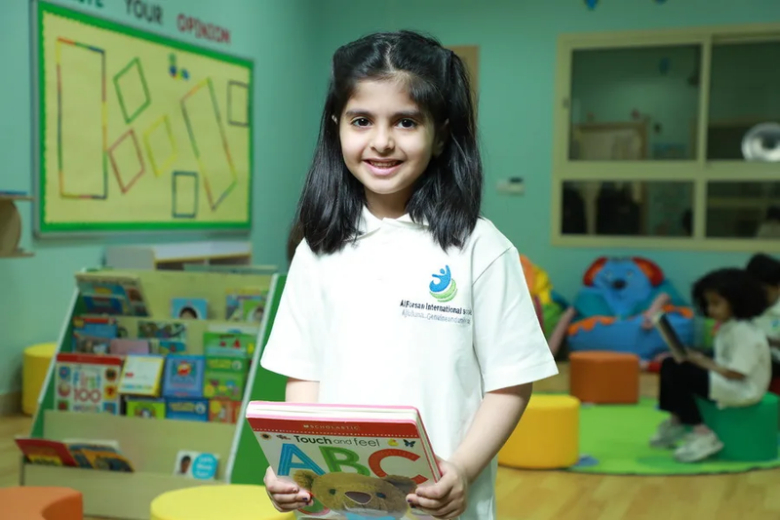 International education can combine strong academic foundations with opportunities to develop communication and critical-thinking skills
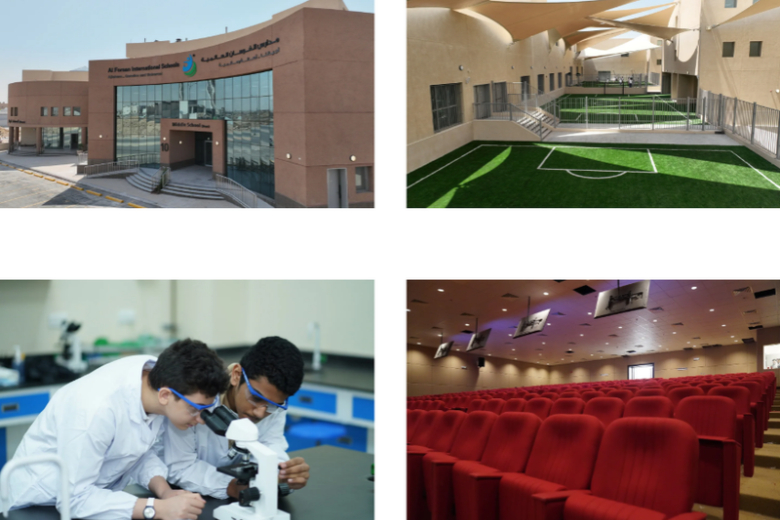
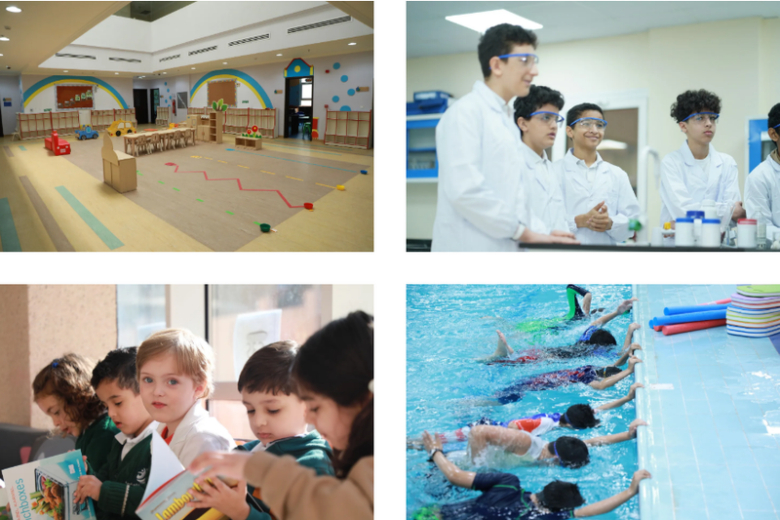 A balanced school environment can support academic progress while helping children maintain strong connections with their language and culture
 Activities beyond the classroom can help children build teamwork, creativity, confidence and new interests
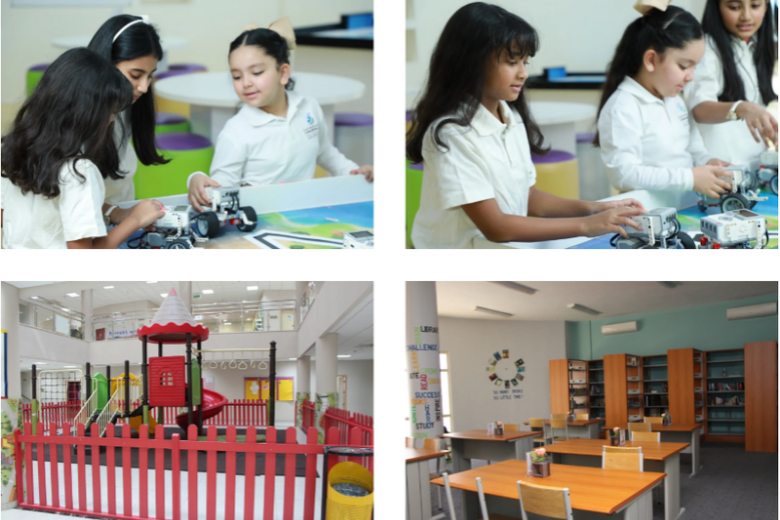 Engaging classrooms give students opportunities to participate, collaborate and develop their understanding
The schools currently operate campuses in Riyadh, Jeddah and Al Khobar and provide education from kindergarten through Grade 12.
For parents comparing schools, several elements of the model are particularly relevant.
Smaller Classes And More Individual Attention
Class size can influence how much individual attention a child receives.
Al Forsan highlights limited class sizes as part of its approach. In kindergarten, two teachers support each classroom, giving younger students additional supervision and support during an important stage of development.
For parents, the important question is not simply how large a classroom is. It is whether teachers can recognise individual strengths, challenges and learning needs.
English-Language Learning With International Standards
English is the main language of instruction at Al Forsan, with Mathematics, Science and other core academic subjects taught through the American curriculum.
The curriculum follows Common Core State Standards and Next Generation Science Standards. The school says at least 60% of its teaching staff are native English speakers from countries including the United States, Canada, South Africa and the United Kingdom.
For families considering an international school, this can provide an opportunity for children to develop academic English alongside subject knowledge.
Arabic And Islamic Learning Remain Part Of School Life
International education does not have to mean choosing between global opportunities and cultural identity.
At Al Forsan, Arabic Language and Islamic Studies form part of the academic programme. The school also offers specialised Arabic for non-Arabic speakers, while French is available from Grade 4.
This combination may appeal to families who want their children to access an international curriculum while maintaining a connection with language and culture.
Academic Support Can Make A Difference
Not every child progresses at the same pace.
Some students may need additional explanation before a concept becomes clear. Others may benefit from extra practice or more time with a particular subject.
Al Forsan lists free reinforcement classes across core subjects as part of its academic support offering.
For parents, this type of support can be particularly useful because it keeps additional academic help connected to the school environment.
Instead of viewing support as a sign that a child is struggling, schools can use it as another way to help students build confidence and strengthen understanding.
Preparing Students For University And Beyond
Parents choosing an international school often think beyond the next academic year.
They may want to know whether their child will have access to recognised qualifications and preparation for university applications.
Al Forsan provides an American High School Diploma and describes its university programme as including preparation for university admission tests for high school students.
The school also promotes SAT and ACT preparation as part of its wider university preparation approach.
For families considering universities in Saudi Arabia or overseas, it is worth asking schools exactly how university guidance works, when preparation begins and what support students receive during the application process.
Learning Does Not Stop When The School Day Ends
A strong learning environment for children extends beyond academic lessons.
After-school activities can give students opportunities to discover interests that may not emerge during Mathematics, Science or English lessons.
Al Forsan highlights religious, educational and recreational programmes alongside activities such as robotics, coding, sport, art and theatre.
These experiences can help children develop skills that are difficult to measure through traditional assessments. Team sports can encourage collaboration, while creative activities can build confidence and communication.
Similarly, coding and robotics can give students opportunities to experiment, solve problems and learn through trial and error.
What Parents Should Ask During A School Visit
A school tour is one of the best opportunities to assess whether a learning environment for children is genuinely suitable.
Rather than focusing only on buildings, parents can observe how students behave in classrooms and corridors.
Are children engaged? Do teachers speak respectfully to them? Are students comfortable asking for help?
Parents should also ask about,
- Class sizes and teacher support
- Academic reinforcement programmes
- Arabic and Islamic Studies
- English-language learning
- Support for non-Arabic-speaking students
- University and admissions preparation
- After-school activities
- Student wellbeing and pastoral support
- The transition between different educational stages
The answers can help families decide whether a school’s educational philosophy matches their child’s needs.
Can International Education And Cultural Identity Work Together?
For many Saudi families, this is one of the most important questions when choosing an international school.
An international education can provide exposure to global curricula, English-language learning and overseas university pathways. At the same time, families may want children to remain connected to Arabic language, Islamic values and their cultural identity.
Al Forsan’s model is designed around this combination. The school describes its approach as providing international education while keeping students rooted in their own language and culture.
Ultimately, parents should look for a school where these priorities are reflected in everyday learning rather than simply appearing in its marketing.
Finding The Right Learning Environment For Your Child
There is no single definition of the perfect school.
A learning environment that works exceptionally well for one child may not be right for another. Some children thrive in highly structured classrooms, while others need more opportunities to explore and collaborate.
The most important consideration is whether the school understands the whole child.
For parents, that means looking at academic standards alongside teacher relationships, class sizes, support systems, language provision, enrichment and cultural values.
Al Forsan International Schools offers an example of a model that brings these elements together through an American curriculum, English-language instruction, academic support, smaller classes, university preparation and programmes designed to maintain connections with Arabic language and Islamic culture.
For families in Riyadh, Jeddah and Al Khobar, the best next step is to visit the school, ask questions and see the learning environment for themselves.
After all, choosing a school is not simply about finding the strongest curriculum on paper. It is about finding an environment where your child can learn confidently, feel supported and develop into the person they are capable of becoming.
For more information please visit
Further Reading
- Back-To-School Stress, How Parents Can Help Children Adjust To The School Routine
- Daraah International School Opens At AMAALA With A Focus On Sustainability And Marine Sciences