










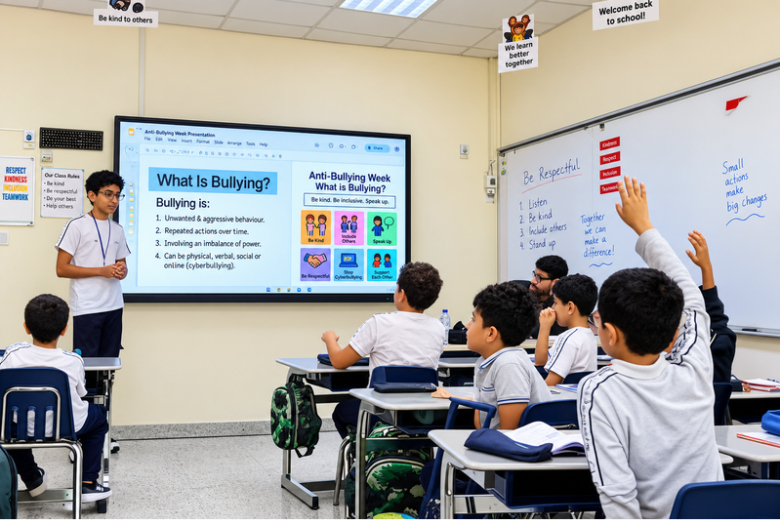
Bullying can affect a child’s confidence, wellbeing and sense of belonging at school. A student-led anti-bullying campaign at AlHussan International School – Jubail is helping younger pupils understand the importance of kindness, respect and peer support.
The campaign, led by high school students alongside the school’s Safeguarding Department and Care Club, used workshops to encourage younger students to recognise bullying and consider how their actions can affect others.
For parents, conversations at home can also play an important role. Children may not always tell an adult when something is wrong, particularly if they feel embarrassed, worried about making things worse or unsure whether what they are experiencing counts as bullying.
What Is Bullying?
Bullying involves repeated behaviour that deliberately hurts, intimidates or humiliates another child. It can be physical, verbal, social or online.
For example, a child may experience repeated name-calling, threats, exclusion from friendship groups or unwanted behaviour through social media and messaging platforms.
However, not every disagreement between children is bullying. Children can fall out, argue or have misunderstandings. Parents can help by listening carefully and looking at whether the behaviour is repeated, harmful or involves an imbalance of power.
Signs Parents Should Look Out For
Children do not always explain what is happening at school. Therefore, parents may need to notice changes in behaviour or mood.
Possible signs include becoming reluctant to attend school, changes in sleep or appetite, withdrawing from friends, losing interest in activities or appearing unusually anxious after using their phone.
A child may also become quieter at home or suddenly become angry or upset over situations that previously would not have caused concern.
These signs do not automatically mean a child is being bullied. However, they can be an opportunity to check in and ask how things are going.
How Parents Can Talk About Bullying
The way adults start the conversation can make it easier for children to open up.
Instead of asking only, “Are you being bullied?”, parents can use broader questions. Asking what happened during the school day, who the child spent time with or whether anyone made them feel uncomfortable can encourage a more natural conversation.
Most importantly, parents should listen without immediately blaming or judging. A child who shares a difficult experience needs to know that they have been heard.
Parents can also reassure children that asking for help is not a sign of weakness. Speaking to a trusted adult can be an important step towards resolving the situation.
Teach Children What They Can Do
Children can benefit from having simple strategies before they face a difficult situation.
Parents can encourage them to,
- Tell a trusted adult if bullying happens.
- Stay close to friends or supportive classmates.
- Avoid responding with physical aggression.
- Keep evidence of online bullying, such as messages or screenshots.
- Block or report harmful accounts where appropriate.
- Tell an adult if they see another child being targeted.
- Remember that bullying is not their fault.
Furthermore, children can learn that being an active bystander matters. Offering support to a classmate, getting an adult or refusing to join in harmful behaviour can make a difference.
AlHussan International School – Jubail Encourages Student Leadership
At AlHussan International School – Jubail, high school students took an active role in promoting a safer and more supportive school community.
Working alongside the Safeguarding Department and Care Club, the student leaders delivered workshops for pupils in lower grades. The sessions focused on kindness, respect and peer support.
The approach also gives older students an opportunity to model positive behaviour for younger pupils. This can help make anti-bullying messages more relatable, while encouraging students to take responsibility for the culture of their school.
For schools, student-led initiatives can complement safeguarding policies by giving pupils a meaningful role in promoting respectful behaviour.
Creating A School Culture Where Children Feel Safe
Preventing bullying is not only about responding when an incident occurs. It also involves creating an environment where children know what respectful behaviour looks like and where they feel comfortable asking for help.
Schools, parents and students all have a role to play. Consistent messages about kindness, inclusion and respect can help children understand how their behaviour affects others.
Ultimately, the most effective anti-bullying approach is one where children know that adults will listen, concerns will be taken seriously and support is available when they need it.
For parents, regular conversations about friendships, behaviour and online experiences can help children develop the confidence to speak up. Meanwhile, schools can continue to provide clear safeguarding systems and opportunities for students to become positive role models within their communities.
For more information please visit
Further Reading
- Saudi Universities Rise In Times Higher Education World University Rankings 2027
- Why Children Need To Recharge At The Weekend And Where Jeddah Families Can Go