












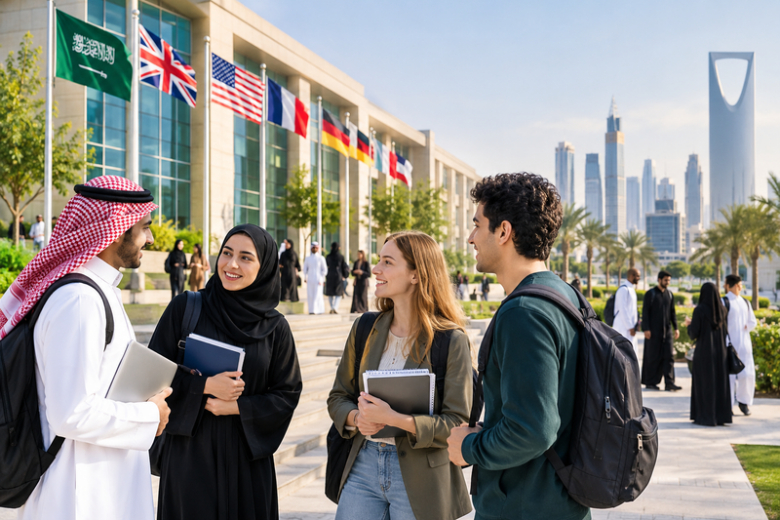
International university branches could soon add to Saudi Arabia’s higher education choices as the Kingdom continues to attract overseas institutions and students. The development comes as more than 200,000 international students have benefited from the Study in Saudi Arabia programme.
Deputy Minister of Education for Planning Eng. Saad Al-Ghamdi said preparations are continuing to grant licences to prestigious international universities seeking to establish branches in Saudi Arabia. He said,
“The number of beneficiaries of the “Study in Saudi Arabia” program has surpassed 200,000 international students.”
For students and families, the development could provide access to a wider range of international programmes without requiring students to study overseas. It could also strengthen links between Saudi universities, employers and global institutions.
International University Branches Could Broaden Student Choices
The planned international university branches form part of Saudi Arabia’s wider efforts to develop higher education and respond to changing workforce needs.
The Ministry of Education has previously outlined the role of foreign university branches in increasing competition, sharing international expertise and supporting programmes linked to labour market demand.
Importantly, Saudi Arabia already has a regulatory framework governing foreign university branches. The framework aims to diversify higher education options, support research and provide programmes that meet national development needs.
For students, this could mean more opportunities to study internationally recognised programmes within the Kingdom.
Meanwhile, universities could benefit from stronger international academic links, research partnerships and access to new areas of specialisation.
Study In Saudi Arabia Attracts More International Students
The growth of the Study in Saudi Arabia programme is another important part of the Kingdom’s higher education strategy.
More than 200,000 international students have now benefited from the programme, according to Al-Ghamdi.
The figure highlights Saudi Arabia’s growing role as a destination for international students. It also reflects efforts to make the Kingdom’s higher education system more accessible to learners from different countries.
For Saudi institutions, a larger international student population can contribute to a more diverse campus environment.
It can also create opportunities for cultural exchange and international collaboration between students and academic staff.
Additionally, attracting overseas students supports the wider development of Saudi Arabia’s higher education sector as it works towards the objectives of Vision 2030.
Saudi Higher Education Enrollment Reaches 83.88 Percent
Al-Ghamdi made the comments during the launch of the Global Education Monitoring Report 2026 at UNESCO headquarters in Paris.
This year’s report focuses on access and equity in education. Saudi Arabia featured prominently in the report, highlighting developments across its education system.
According to data from the UNESCO Institute for Statistics, the higher education enrolment rate in Saudi Arabia reached 83.88 percent.
The figure points to significant participation in post-secondary education and comes as the Kingdom continues to expand pathways beyond school.
Furthermore, technical and vocational education enrolment increased by more than 30 percent in 2024.
This growth is particularly relevant to students considering alternatives to traditional university routes. Technical and vocational education can provide more direct pathways into skilled employment and areas of growing labour market demand.
The expansion also reflects the objectives of Saudi Vision 2030 and the Human Capability Development Programme.
Scholarships And Global University Rankings Highlight Wider Progress
Saudi Arabia is also expanding international opportunities through its scholarship programmes.
Al-Ghamdi highlighted the Strategic Scholarship Programme, which has more than 56,000 recipients.
For students, international scholarships can provide opportunities to gain qualifications and experience from leading institutions abroad. They can also support the development of skills that students can later bring back to the Kingdom.
Meanwhile, Saudi universities are gaining greater international recognition.
King Fahd University of Petroleum and Minerals achieved 67th place in the QS World University Rankings, according to Al-Ghamdi.
Several Saudi universities also appeared among the world’s top 100 universities for patents in 2025. This points to growing activity in research and innovation across the sector.
For school students considering their future pathways, these developments offer a broader picture of the opportunities available after secondary education.
What The Changes Could Mean For Students
The planned international university branches could give students more choices when deciding where and what to study.
For families, the availability of international programmes within Saudi Arabia could also provide an alternative to sending students overseas.
Schools and educators may also need to help students understand the expanding range of higher education pathways available to them.
This includes traditional university degrees, technical and vocational education, scholarship routes and programmes delivered through international institutions.
Ultimately, the Kingdom’s higher education strategy is moving beyond simply increasing enrolment. The focus is also on improving the range of opportunities available to students and strengthening the connection between education, research and employment.
As international university branches progress through the licensing process, students, parents and educators will be watching closely to see which institutions enter the Saudi market and what programmes they offer.
For more education updates, please visit
Further Reading
- Beyond The Balloons, What Saudi Children Really Need In Their First Week Of School
- Bear Hugs Eyes 15 New Saudi Nurseries As Early Childhood Sector Grows