










Saudi education reforms for the new academic year will change how teachers work, develop professionally and use technology in schools.
The reforms include more flexible working hours based on individual school needs, a requirement for teachers to teach only within their specialisations, wider use of artificial intelligence and more than 37,000 promotions for educational and administrative staff.
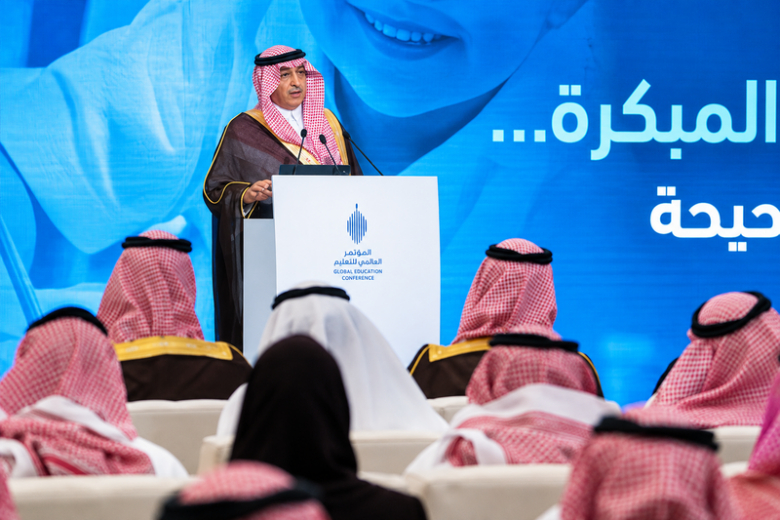
Education Minister Yousef Al-Benyan announced the measures as part of a wider programme aimed at improving education quality and strengthening the student experience. The plans also include professional development for more than 240,000 teachers and continued efforts to expand early childhood education.
Saudi Education Reforms Put Teachers At The Centre
Al-Benyan outlined the plans at Princess Nourah University in Riyadh, highlighting the importance of teachers in improving education outcomes.
“The teacher is a fundamental pillar in education. The approval of the General Education System is a continuation of the government’s approach in supporting the education ecosystem and ensuring the ongoing development of education.”
He said the education system would continue to focus on religious values, national identity, Arabic language and the rights and responsibilities of students.
The minister also linked the reforms to Saudi Vision 2030 and its goal of improving education quality and student competitiveness.
Teachers To Receive More Flexible Working Hours
One of the most significant changes concerns teachers’ daily working hours.
The Ministry of Education is revising the “Hudoori” attendance mechanism, which monitors attendance and departure for teachers and other school staff.
Under the revised approach, working hours will reflect the needs of each school, its timetable and operational plan.
This means teachers will not necessarily follow one standard start and finish time across all schools. Instead, their working day will be linked to their scheduled responsibilities.
For teachers, the change could provide greater flexibility. However, schools will still need to ensure that teaching, assessment, supervision and other required duties are completed.
The reform therefore gives school leaders greater scope to organise staff time around the practical needs of their schools.
Teachers Will Not Teach Outside Their Specialisations
The ministry has also introduced a clear requirement concerning teacher specialisation.
It said that “a teacher shall not teach a subject in which they are not specialized, ensuring the student’s right” to quality education.
For students and parents, this is an important change because it places subject expertise at the centre of classroom teaching.
For school leaders, the requirement may also place greater emphasis on staff deployment and timetabling. Schools will need to ensure that teachers are assigned subjects that match their qualifications and areas of expertise.
More Than 37,000 Education Staff To Be Promoted
Professional progression is another major part of the reforms.
Al-Benyan said the ministry planned to issue more than 28,000 promotions for educational staff and 9,500 promotions for administrative staff.
Together, this represents more than 37,000 promotions across the education workforce. Al-Benyan said,
“Regarding professional advancement, the Ministry of Education is also looking to carry out promotions in the next month; promotions will be issued for more than 28,000 educational staff, and 9,500 promotions for administrative staff will be issued as well.”
The promotions form part of a wider focus on developing and retaining education professionals.
240,000 Teachers Set For Training And Development
Teacher development will also expand under the new plans. Al-Benyan said,
“There is a training, development and professional plan for teachers, which is considered one of the largest training and professional plans for the education ecosystem. Through the Human Capability Development Program initiative, more than 240,000 male and female teachers will be trained. During the past year, 60,000 from this batch were trained, and the goal is the professional development of all education staff across different stages.”
For educators, the scale of the programme signals a continued focus on professional learning across different stages of education.
The ministry has also reported efforts to strengthen specialist support for gifted education. Around 4,000 teachers have been trained to identify gifted students, while more than 45,000 students have enrolled in specialised schools for gifted learners.
AI Tools To Reduce Administrative Workloads
Artificial intelligence is another central element of the reforms.
Saudi Arabia designated 2026 as the Year of Artificial Intelligence, with national efforts focused on increasing awareness and expanding the responsible use of AI.
Within education, the ministry is testing AI tools designed to reduce operational and administrative workloads for teachers and students.
The initiative involves partnerships with the Saudi Data and Artificial Intelligence Authority and Saudi AI company Humain.
“Artificial intelligence (will) assist teachers, allowing them to focus on their role and follow up on students’ needs,” Al-Benyan said.
For teachers, the intended benefit is practical. AI tools could reduce time spent on routine administrative tasks, allowing educators to give more attention to teaching and student support.
However, the wider adoption of AI also makes responsible use and appropriate teacher oversight important parts of implementation.
Early Childhood Education Remains A Major Priority
The reforms extend beyond schools and teachers.
In early childhood education, the ministry is targeting an increase in enrolment from 35 per cent to 90 per cent by 2030.
The expansion reflects the Kingdom’s wider focus on improving access to early education and strengthening learning during the early years.
For parents, greater access to early childhood education could provide more options for children before they enter formal schooling.
36 Million Textbooks Delivered To Schools
The ministry has also focused on improving the delivery of learning materials.
More than 36 million textbooks were delivered to schools before the summer break, according to Al-Benyan.
“Over the past three years, the curricula or textbooks used to reach schools two weeks before the start of the academic year.”
“This year, through working with the Tatweer company and improving supply chains, more than 36 million books reached schools before the start of this year’s school summer. Among them, 60,000 books reached the homes of” students, in cooperation with the Saudi postal service, SPL. He added,
“This is an initiative through which we aim to improve the quality of service for students and their parents.”
The focus on earlier textbook delivery addresses a practical issue for schools and families. Students and teachers can begin the academic year with learning materials already available.
Saudi Students Continue To Gain International Recognition
The ministry also highlighted recent achievements among teachers and students.
Seventy-two Saudi teachers received local and international awards last year, while students won more than 400 local and international awards.
In addition, around 70 per cent of Saudi scholarship students were accepted to study at the world’s top 50 universities, according to the ministry.
These figures form part of the ministry’s broader emphasis on improving student outcomes and developing education talent. He added,
“I bet on teachers in the Kingdom.”
What The Reforms Mean For Saudi Schools
The changes will affect several parts of school life, from teacher timetables and professional development to classroom specialisation and the use of AI.
For teachers, the reforms bring new professional development opportunities alongside changes to working arrangements.
For school leaders, the measures will require careful planning around staffing, timetables, teacher specialisations and technology.
Meanwhile, parents can expect a stronger emphasis on teacher expertise, access to learning resources and the quality of student support.
The reforms also form part of the wider implementation of Saudi Arabia’s General Education System. The system is intended to improve the quality of educational outcomes, strengthen the student experience and support greater confidence among families.
Ultimately, the success of the reforms will depend on how effectively they are implemented in schools. For educators and school leaders, the coming academic year will therefore bring both new opportunities and new responsibilities.
For more education updates, please visit
Further Reading
- Beyond The Balloons, What Saudi Children Really Need In Their First Week Of School
- Bear Hugs Eyes 15 New Saudi Nurseries As Early Childhood Sector Grows