












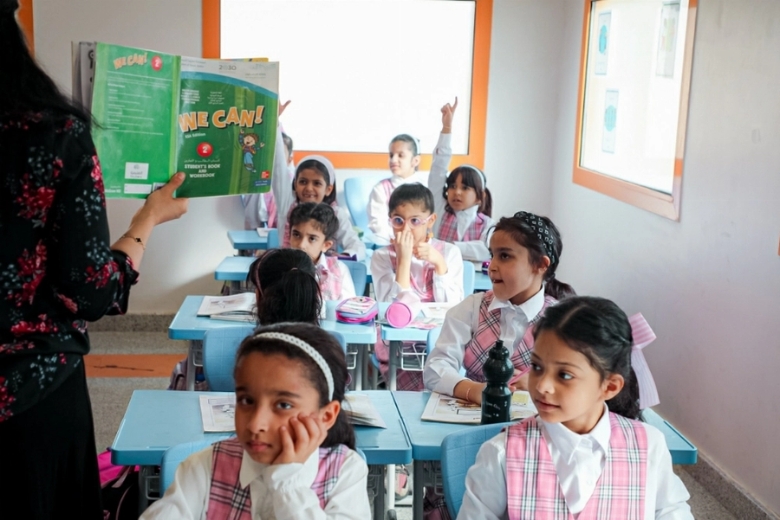
Saudi Arabia has approved the executive and regulatory provisions of its new General Education Law, introducing one of the most significant reforms to the Kingdom’s school education system in recent years.
The new legislation establishes a comprehensive legal framework covering education from nursery through Grade 12. It introduces stronger governance, raises quality standards, expands private sector participation and supports the goals of Saudi Vision 2030.
For parents, educators, school leaders and students across the region, the changes provide greater clarity on how schools will be governed, how teachers will be supported and how students will benefit from new learning pathways and stronger educational standards.
A New Council Will Oversee General Education
One of the biggest changes is the creation of the General Education Affairs Council, chaired by the Minister of Education.
The council includes representatives from several government ministries, the Education and Training Evaluation Commission and the private sector.
It will oversee national education policies, long-term strategies and planning. Additionally, the council will determine admission ages for early childhood and school education, recommend changes to compulsory education requirements, approve teacher employment regulations, oversee virtual and private schools, regulate educational consulting professions and recommend the academic calendar for Cabinet approval.
Compulsory Education Continues Until Age 15
The law confirms that compulsory education begins at the age of six and continues until students reach 15 years of age.
The Ministry of Education will have the authority to take legal action against anyone responsible for preventing a child from receiving compulsory education or causing a student to leave school during these years.
Meanwhile, education at government schools will remain free of charge.
Arabic Remains the Main Language of Teaching
Arabic will continue to be the principal language of instruction across general education.
However, schools may teach in an additional language where appropriate.
The law also maintains separate boys’ and girls’ schools after the early childhood stage in public education. This requirement does not apply to private schools.
Classroom Learning Remains the Priority
The legislation confirms that classroom learning will remain the primary method of education across all year groups.
However, it also recognises the growing role of educational technology in supporting face-to-face learning.
Furthermore, the law expands lifelong learning opportunities through electronic learning platforms, distance education, community learning centres and self-paced education programmes.
The Ministry of Education will introduce regulations for lifelong learning certificates while continuing to develop synchronous, asynchronous and self-directed online learning.
More Flexible Learning Pathways
The Ministry of Education will be able to introduce different learning pathways within general education, including specialised and vocational routes that better reflect labour market needs.
Additionally, students will benefit from clearer regulations allowing movement between academic, vocational and technical education pathways.
This flexibility is expected to help students choose programmes that better match their interests, strengths and future careers.
Greater Support for Students With Additional Needs and Gifted Learners
The new law strengthens support for students with disabilities by requiring schools to provide appropriate educational assistance, assistive technologies and assessment methods suited to individual learning needs.
Students whose disabilities prevent them from attending mainstream schools will continue to receive education through specialised centres. Digital and distance learning programmes will also help ensure continuity of education.
Meanwhile, gifted learners will benefit from expanded specialist programmes, dedicated classes, specialised schools, enrichment centres, clearer identification standards, enhanced teacher training and stronger partnerships with universities and research institutions.
The legislation also allows exceptionally high-performing students to accelerate through year groups under regulated conditions.
Higher Standards for Private Schools
Private schools will be required to meet stricter quality assurance standards under the new framework.
Schools must obtain accreditation from the Education and Training Evaluation Commission or another internationally recognised accreditation body approved by the Kingdom.
The Ministry of Education will also oversee licensing, ownership transfers, school operations and the introduction of international curricula. Additionally, schools must continue teaching national identity subjects approved by the National Curriculum Centre.
Applications for education licences must receive a written decision within 30 days. Applicants whose requests are rejected will have the right to appeal.
A Stronger Role for Private Education
The legislation provides clearer regulations for private and non-profit education providers, supporting Saudi Arabia’s goal of expanding education opportunities through Vision 2030.
Additionally, the Ministry of Education may provide eligible private schools with financial, human resource or in-kind support under specified conditions.
Greater Support and Accountability for Teachers
The law gives teachers stronger professional protections while also setting clear expectations.
Teachers will be entitled to a suitable working environment, access to professional development programmes, opportunities to contribute to improving education and financial or non-financial incentives linked to outstanding performance.
At the same time, teachers must deliver approved curricula, support students’ individual learning needs, promote creativity and innovation, identify gifted learners, uphold national values and professional ethics and participate in ongoing professional development.
Stronger Disciplinary Measures
The legislation introduces a formal disciplinary framework covering teachers, school leaders and private educational institutions.
Authorities may take immediate action to protect the learning environment, including temporarily removing individuals from duty while investigations are carried out.
Serious breaches could result in dismissal and permanent disqualification from working in education.
Private schools that breach regulations may receive warnings, suspension of student admissions, fines ranging from SR5,000 to SR50,000 or licence revocation.
Where a school’s licence is revoked, students must be allowed to complete the academic year at the owner’s expense to minimise disruption to their education.
Additionally, the law requires the dismissal of individuals convicted of crimes involving dishonesty or moral misconduct. It also requires schools to report incidents of violence occurring within or around educational institutions.
Why the New Education Law Matters
The General Education Law provides Saudi Arabia with a unified legal framework for managing school education while strengthening accountability, governance and educational quality.
For parents, the reforms offer greater reassurance around school standards and student protection. For educators and school leaders, they provide clearer expectations, stronger professional support and more consistent regulations.
Ultimately, the legislation supports Saudi Arabia’s ambition to build a high-quality education system that prepares young people with the knowledge and skills needed for the future.
For more updates from the ministry of education, please visit
Further Reading
- Skyscanner Reveals the Cheapest Weeks for Saudi Families to Book Summer Flights
- ZAKS Helps Every Student Start the School Year with the Perfect Uniform Fit