












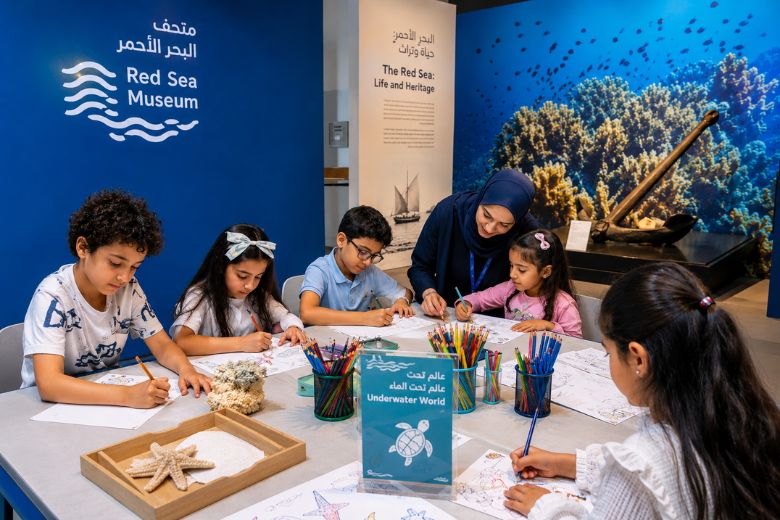
The Red Sea Museum in Jeddah marked International Museum Day with a family-focused programme that invited children and parents to explore heritage, biodiversity and culture together. The initiative transformed the galleries into interactive learning spaces, offering a more engaging museum experience. It also reflected how museums in Saudi Arabia are becoming more inclusive and participatory, especially for younger visitors and families.
Red Sea Museum Experience Brings History and Nature to Life
Throughout the day, visitors took part in activities inspired by the Red Sea’s history, pilgrimage routes, maritime heritage and marine biodiversity. Additionally, six pop-up creative stations were placed across the galleries to encourage exploration through drawing, storytelling and observation.
Abdullah bin Abdulaziz Al-Hammad, CEO of the Museums Commission, said museums now play a wider cultural role beyond preservation.
“In Saudi Arabia, museums are increasingly becoming dynamic cultural spaces that invite discovery, dialogue, and deeper engagement with the Kingdom’s rich history and evolving cultural landscape. As the cultural sector continues to evolve, International Museum Day also highlights the importance of collaboration between museums, artists, academics, and cultural institutions in enriching public understanding and strengthening cultural participation.”
Interactive Red Sea Museum Experience for Families and Children
The programme featured six themed stations that made learning more hands-on and engaging for families. Each activity used simple tools like drawings, visuals and colouring materials to spark curiosity.
It began with “Al-Bunt”, which introduced traditional Red Sea architecture and local building materials, helping visitors understand coastal heritage in a simple way. At “You Are the Artist”, children sketched museum objects, including a maritime anchor, with their artwork later displayed in the Discovery Room. Meanwhile, “Underwater World” brought marine life to life through videos and colouring activities inspired by sea creatures.
The “Murjan & Sunken Treasures” station used storytelling to guide families through a temporary exhibition, while “Sacred Cities” explored pilgrimage routes across the Red Sea through interactive tasks that linked history and culture. The experience ended in the Discovery Room with storytelling sessions titled “In the Heart of the Red Sea.” Educators shared stories that brought together the region’s history, environment and culture. The sessions also helped children reflect on what they had seen across the galleries. Visitors said the format made learning more engaging and easy to follow.
Hammad Saleh, who attended with his family, said the programme created a more active learning experience for children.
“The activities made the museum feel alive for my children. They were not just looking at objects, they were interacting with them, asking questions and creating their own stories.”
Similarly, Maria Rehman said the experience helped connect different parts of the museum journey. She added that each stop flowed into the next, making the visit feel like a simple and enjoyable journey through the Red Sea’s history.
Red Sea Museum Strengthens Family Learning and Cultural Engagement
These initiatives reflect a growing focus on interactive learning in Saudi Arabia’s cultural institutions. They help children explore history, nature and heritage through hands-on experiences. The Red Sea Museum shows how creativity and storytelling can make cultural spaces more engaging for families.
For more information please visit