











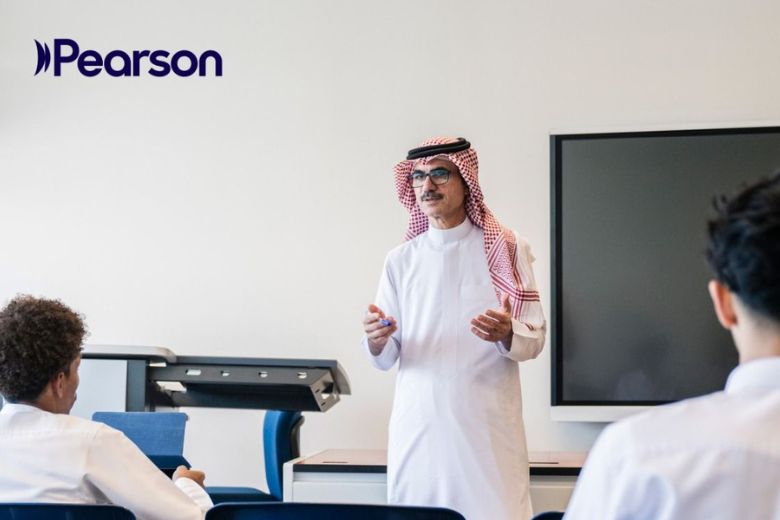
New research from Pearson (FTSE: PSON.L), the world’s lifelong learning company, reveals that gaps at key career and learning transition points are costing Saudi Arabia an estimated SAR 62 billion in lost earnings annually for Saudi nationals. Pearson’s report, Lost in Transition: Fixing Saudi Arabia’s SAR 62 billion ‘learn-to-earn’ skills gap, examines the economic and personal impact of learning gaps during major career transitions. These include the move from formal education into employment, transitions between jobs, and disruptions caused by artificial intelligence and automation.
In a youth-driven economy where roughly 70 percent of the population is under the age of 35, the findings highlight the urgency of strengthening skills development pathways to support the ambitions of Vision 2030.
Paying the Price for Broken Career Pathways
The research estimates that career transition inefficiencies and skills mismatches cost the Saudi economy SAR 62 billion in lost earnings annually for Saudi nationals. When non-Saudi workers are included, the total rises to SAR 196 billion, equivalent to 4.2 percent of GDP. Automation disruption accounts for approximately half of these losses and places 23 percent of Saudi jobs at high risk. Pearson estimates that reducing reskilling time for affected workers by just 20 percent could add SAR 6.3 billion in annual earnings.
The transition from education to employment remains prolonged, mirroring challenges seen in other major global economies. High school and university graduates take an average of nearly 40 weeks to secure employment, reflecting persistent mismatches between academic outcomes and labour market needs.
Job Mobility and Prolonged Unemployment
Changing jobs, particularly following involuntary separations, exposes deeper structural mismatches. Displaced Saudi workers spend an average of 11.3 months unemployed before re-entering the workforce, with around 40 percent remaining out of work for more than a year.
These extended periods of unemployment contribute significantly to lost productivity and earnings, while also placing additional pressure on individuals and families.
A Generation at Risk
Youth unemployment in Saudi Arabia remains high at nearly 15 percent. Demographic pressures are set to intensify, with the population aged 20 to 24 projected to grow from 2.69 million in 2025 to 3.22 million by 2030. Without targeted interventions, these trends risk widening the gap between education systems and employment outcomes at a critical point in the Kingdom’s economic transformation.
Five Actions to Build a Resilient Workforce
Aligned with Vision 2030, Pearson identifies five priority actions to strengthen the learning-to-earning pipeline through collaboration between government, employers and educators.
These include supporting educators and employers to diagnose skills needs by identifying priority roles and tasks, enabling more targeted skills development. The report also calls for shorter transition times through expanded internships, apprenticeships and mentorships that accelerate movement from classroom to career and between jobs.
Adapting curricula and training programmes to reflect real-world market demands and evolving technologies is another key recommendation, alongside expanding work experience opportunities through placements and industry partnerships.
Finally, Pearson highlights the importance of improved labour market intelligence through investment in platforms that enhance visibility into job openings and skills requirements, helping reduce mismatches and improve employment outcomes.
Vision 2030 and the Future of Skills
Naseem Tuffaha, Chief Business Officer at Pearson, said:
“Saudi Arabia’s youth-driven economy holds tremendous potential, but inefficient transitions are costing SAR 62 billion annually while nearly a quarter of jobs face automation risk. The solution requires two key shifts: building modern skilling pathways that deliver job-ready capabilities and making ‘learning to learn’ a core competency across education and industry. This dual approach will help build the resilient, adaptable workforce needed to achieve the ambitions of Vision 2030.”
The Saudi report forms part of Pearson’s global Lost in Transition: Fixing the Skills Gap research series, which warns of a growing worldwide skills chasm between employer needs and workforce capabilities, and calls for a fundamental rethink of how learning and skills development are delivered.
For more information, please visit:
Further Reading:
- Downe House Riyadh Celebrates Outstanding A Level and GCSE Results 2024/25
- Cognita Expands into Saudi Arabia, Oman and Qatar with Strategic School Partnerships
- Minerva Virtual Academy Expands to the Gulf – Offers Flexible British Education